If you’ve ever hooked up a caravan, trailer, or work rig and thought, “That should be right…” — you’re not alone.But h ere’s the reality: most towing issues in Australia come down to incorrect setup, not bad driving.
And in 2026 – with stricter compliance, heavier caravans, and increasingly complex vehicle electronics — getting your tow vehicle setup right isn’t just smart…It’s essential.
This guide will walk you through everything you need to know to safely, legally, and confidently set up your tow vehicle in Australia — whether you’re towing for work, travel, or both.
Why Proper Tow Vehicle Setup Matters
A poorly set-up tow vehicle doesn’t just affect performance — it can:
-
Void your insurance
-
Lead to fines or defect notices
-
Cause long-term vehicle damage
-
Put you and others at serious risk
Most towing-related incidents in Australia are not caused by driver error — they’re caused by incorrect weight, poor balance, or improper setup.
At Sandgate Auto Electrics & Automotive Services, we regularly see vehicles that should be capable — but fail because the setup wasn’t engineered correctly.
Understanding the Key Towing Terms (You Must Know These)
Before installing anything, you need to understand your numbers.
GVM (Gross Vehicle Mass)
The maximum your vehicle can weigh — including passengers, fuel, accessories, and tow ball weight.
GCM (Gross Combination Mass)
The total combined weight of your vehicle and trailer.
ATM (Aggregate Trailer Mass)
The total weight of your trailer when fully loaded.
Tow Ball Mass (TBM)
The downward force on your tow ball — typically 7–15% of the trailer weight.
Critical insight: Your real towing capacity is often significantly lower than advertised once your vehicle is loaded.
Step-by-Step: How to Set Up a Tow Vehicle Properly
Step 1: Confirm Your Legal Towing Capacity
Start with manufacturer specs — but go further. It’s important to ensure:
Australian law requires compliance across all limits simultaneously — not just towing capacity.
???? Pro tip: Always verify your setup using a weighbridge
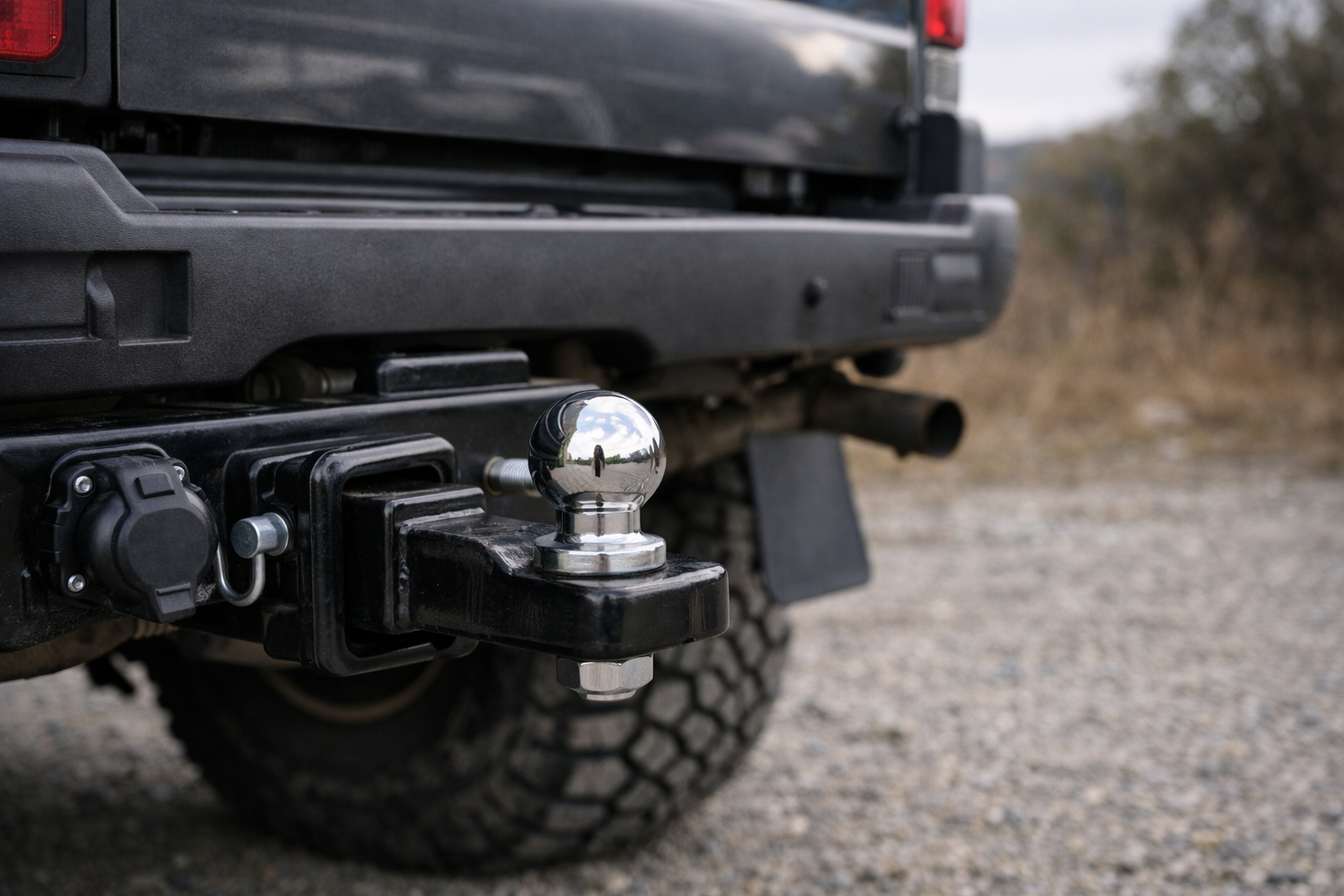
Step 2: Install the Right Tow Bar
Not all tow bars are created equal. Each tow bar has:
And importantly:
Your legal towing limit is determined by the lowest-rated component in your setup.
At Sandgate Auto Electrics, we ensure:
-
Vehicle-specific tow bars
-
Fully compliant installations
-
Correct load ratings for your application
Step 3: Get Your Electrical System Right
This is where many setups fail — especially DIY ones. A proper towing electrical system includes:
-
Trailer plug wiring (7-pin or 12-pin)
-
Electric brake controller
-
Caravan battery charging system
-
Anderson plug setup
Poor wiring can result in brake failure, battery drain, and damage to modern vehicle electronics.
Explore our Auto Electrical Services in Sandgate to ensure your towing setup is safe, compliant, and reliable.
Step 4: Weight Distribution & Load Setup
This is one of the most overlooked — and most important — factors.
Best practice:
Incorrect distribution leads to:
Weight distribution hitches can dramatically improve towing stability for heavier loads.
Step 5: Suspension & GVM Upgrades
Modern vehicles often reach their limits quickly when towing. Consider:
Benefits include:
Step 6: Brake Systems & Safety Equipment
If your trailer exceeds 750kg, brakes are mandatory in Australia. For heavier setups:
-
Electric brakes are required
-
Breakaway systems may be necessary
-
Brake controllers must be properly calibrated
This is a non-negotiable safety system.
Step 7: Tyres, Axles & Compliance
Ensure:
Even if your weights are legal, incorrect tyres or axle overload can still make your setup unsafe and non-compliant.
Common Mistakes (That Cost People Thousands)
These are the most common issues we see:
❌ Relying only on max towing capacity
Real-world capacity is almost always lower.
❌ Ignoring tow ball weight
Incorrect TBM = instability and unsafe handling.
❌ DIY electrical wiring
Often leads to failures and expensive damage.
❌ Overloading the rear axle
Extremely common — and dangerous.
❌ Not checking GCM
You can be under towing capacity but still illegal overall.
Tow Vehicle Setup Checklist
Before you tow, confirm:
-
GVM within limits
-
GCM within limits
-
Tow bar rating compliant
-
Tow ball weight correct
-
Load properly distributed
-
Brakes functioning correctly
-
Electrical system tested
-
Tyres and pressures correct
Why Professional Setup Matters (More Than Ever in 2026)
Modern vehicles are complex — with integrated safety systems, sensors, and electronics. A professional setup ensures:
-
Full compliance with Australian regulations
-
Proper integration with vehicle systems
-
Safe real-world towing performance
At Sandgate Auto Electrics & Automotive Services, we specialise in:
???? Book a Tow Vehicle Setup & Inspection today.
FAQs
What is the most important factor in tow vehicle setup?
The most critical factor is ensuring your vehicle remains within its GVM (Gross Vehicle Mass) and GCM (Gross Combination Mass) limits at all times. These are legally enforceable limits in Australia — exceeding them compromises safety, can result in fines or defect notices, and may void your insurance in the event of an accident.
Can I tow up to my vehicle’s maximum capacity?
No — and this is one of the most misunderstood aspects of towing. The manufacturer’s maximum towing capacity is based on a lightly loaded vehicle. Once you add passengers, accessories, fuel, and cargo, your available towing capacity is reduced. In real-world conditions, most vehicles cannot legally tow their advertised maximum.
Do I need an electric brake controller?
Yes — if your trailer is fitted with electric brakes (which is standard for most trailers and caravans over 750kg), a properly installed and calibrated electric brake controller is essential. Without it, braking performance is significantly reduced, increasing stopping distance and the risk of loss of control.
What happens if my tow setup is overweight?
If your setup exceeds legal weight limits, your vehicle is considered unroadworthy. This can result in fines, defect notices, and insurance claims being denied. More importantly, it significantly increases the risk of brake failure, instability, and serious accidents — including trailer sway and rollovers.