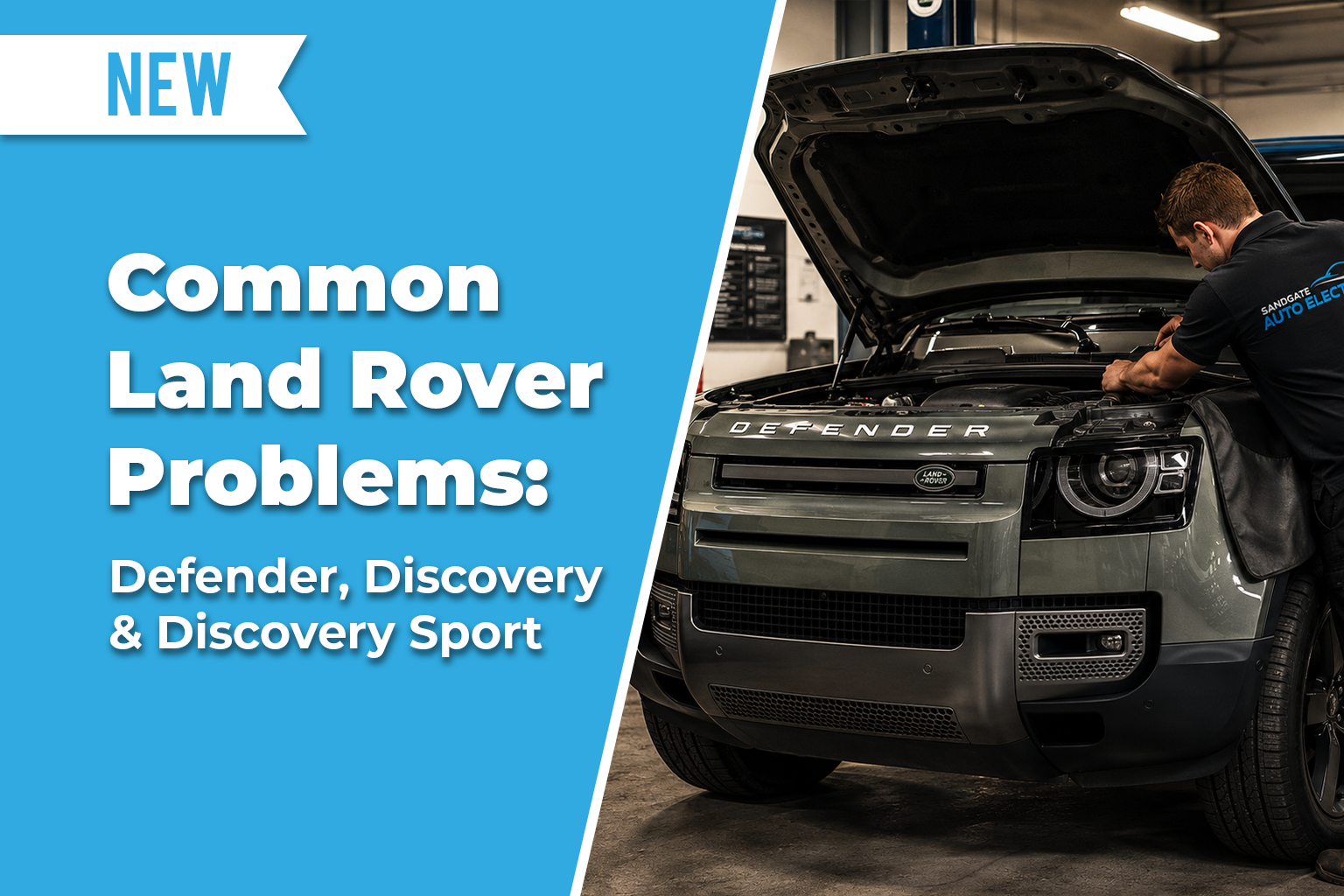
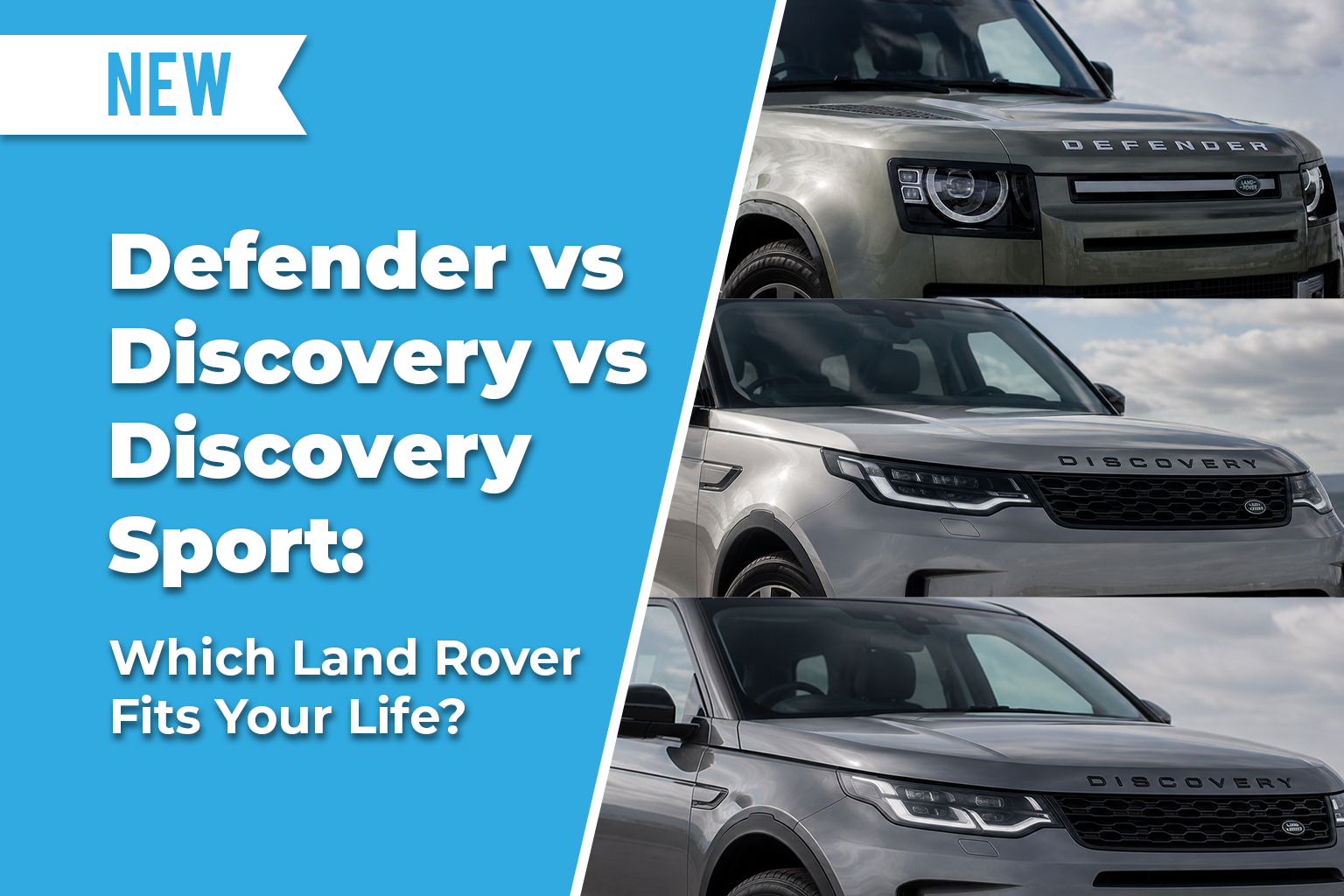
Land Rovers are built to go almost anywhere.
Unfortunately, when something goes wrong, finding the actual cause can be far more difficult than spotting the warning light.
A frozen touchscreen could be a software issue, a communication fault or simply low battery voltage. A rattling engine could point to a timing-system problem, but the correct diagnosis depends on the model, engine and year. A Discovery Sport with reduced power may have a turbocharger fault—or it could be something as small as a leaking hose or failed vacuum supply.
That is why searching for common Land Rover problems can produce confusing answers. The Defender, Discovery and Discovery Sport may share a badge, but they do not share exactly the same mechanical and electrical systems.
This guide explains the documented problems owners should watch for, the warning signs that require attention and why proper diagnostics should come before expensive parts replacement.
Land Rover Problems at a Glance
The issues most commonly associated with these three models include:
- New Defender: software, infotainment and electrical faults
- Discovery: timing-system wear on certain engines and model years
- Discovery Sport: infotainment failures, turbo underboost and reduced-power faults
- Across multiple models: incomplete software updates, battery-related warning messages and communication faults between control modules
These problems do not affect every Land Rover. Vehicle specification, service history, engine type, software version and driving conditions all matter.
Common Defender Problems
The modern Defender, introduced for the 2020 model year, is significantly more advanced than the original utility-focused Defender.
Its electronics control everything from infotainment and driver-assistance systems to engine management, terrain settings, suspension and remote software updates.
That technology makes the new Defender capable and comfortable, but it also creates more opportunities for software and electrical faults.
1. Software Updates That Fail to Complete
Jaguar Land Rover issued a service action covering certain 2020–2023 Defender vehicles where Software Over The Air updates failed to complete.
The affected systems included the Pivi infotainment system, Vehicle Domain Controller and Gateway Module. Vehicles that could not complete the updates remotely required a wired workshop intervention. The same campaign also covered selected Discovery and Discovery Sport vehicles.
An incomplete update may cause:
- Infotainment glitches
- Missing software improvements
- Persistent update notifications
- Navigation or connectivity problems
- Vehicle functions behaving inconsistently
- Communication faults between electronic modules
A factory reset may temporarily clear a frozen screen, but it will not resolve an underlying module, wiring, battery or software-version problem.
2. Infotainment Freezing or Restarting
Owners may experience:
- A blank or frozen touchscreen
- Delayed startup
- Bluetooth disconnections
- Apple CarPlay or Android Auto interruptions
- Navigation failing to load
- Audio cutting out
- Repeated system restarts
These symptoms are not always caused by a failed screen. The problem may come from software, the infotainment control module, low operating voltage or another module interrupting communication across the vehicle’s network.
That is why a full diagnostic scan and battery test should be performed before replacing infotainment components.
3. Multiple Warning Lights Appearing Together
One of the more confusing Defender electrical issues is the sudden appearance of several warnings at once.
The vehicle may display messages relating to:
- Terrain Response
- Stability control
- Emergency braking
- Suspension
- Steering assistance
- Parking sensors
- Cameras
- Driver-assistance systems
This does not necessarily mean every listed system has failed.
Modern vehicle modules share data. One voltage, sensor or communication fault can trigger warnings across several connected systems. Replacing whichever component appears first on a generic scan tool can become an expensive guessing game.
4. Powertrain Software Faults
A safety recall was issued in the United States for certain 2020–2021 Defenders because the Powertrain Control Module could unexpectedly switch off while the vehicle was moving, causing the engine to cut out without warning. The remedy involved updated software. Recall eligibility was limited to specific vehicles and VIN ranges.
This does not mean every Defender from those years has the defect. It demonstrates why owners should check their VIN for outstanding campaigns whenever unusual electrical or powertrain behaviour develops.
Australian owners can use Land Rover Australia’s official VIN recall checker to determine whether a recall applies to their vehicle.
Warning Signs Defender Owners Should Not Ignore
Arrange a diagnostic inspection when you notice:
- Repeated no-start or slow-start conditions
- Warning lights that return after restarting
- Infotainment systems frequently crashing
- Failed software updates
- Sudden engine shutdown
- Battery discharge while parked
- Suspension or terrain systems becoming unavailable
- Cameras, parking sensors or safety systems dropping offline
Common Discovery Problems
The Discovery name has been used across several generations and a wide range of petrol and diesel engines.
This matters because not every Discovery has the same timing system. Some engines use timing chains, while others have belt-driven components and entirely different maintenance requirements.
Before diagnosing alleged Discovery timing chain problems, the workshop must confirm the exact model, engine, production year and VIN.
1. Timing Chain and Tensioner Wear on Certain Models
Timing chains are designed to operate for a long time, but they still depend on correct lubrication, working tensioners and intact guides.
When a tensioner or related timing component wears, the chain may become loose. This can cause inaccurate valve timing and, in serious cases, internal engine damage.
Jaguar Land Rover North America previously introduced partial extended warranty coverage for timing chain and tensioner repairs on certain 2012–2014 LR4 vehicles, the model sold as the Discovery 4 in other markets. The programme also included partial coverage for engine damage caused by a chain or tensioner failure. That coverage was market-specific and does not automatically apply to Australian vehicles.
Symptoms of a Timing-System Problem
Possible warning signs include:
- Metallic rattling during cold startup
- Rattling from the front or rear timing area
- Check-engine light
- Rough running
- Reduced performance
- Extended cranking
- Engine timing fault codes
- Camshaft and crankshaft correlation faults
- Metal particles in the engine oil
A startup rattle does not automatically prove that the chain has stretched. Variable camshaft timing actuators, tensioners and oil-pressure problems can create similar symptoms.
Jaguar Land Rover technical information documents cases where an engine rattle and timing-related fault codes were traced to a variable camshaft timing unit. The repair procedure included replacement of the affected actuator and timing-chain tensioner on specific engines and vehicles.
This is why the engine should be tested rather than diagnosed by sound alone.
2. Why Discovery Timing Problems Become Expensive
A timing-system repair becomes significantly more expensive when early symptoms are ignored.
If valve timing moves too far out of position, the engine may:
- Run poorly
- Misfire
- Lose power
- Fail to start
- Suffer piston-to-valve contact
- Require extensive cylinder-head or engine repairs
The safest response to a new metallic engine rattle is to stop treating it as normal and arrange an inspection.
3. Infotainment and Software Problems
Later Discoverys use highly integrated infotainment and vehicle-control systems.
Certain 2021–2023 Discovery vehicles were included in JLR’s service action for failed over-the-air updates that required wired diagnostic intervention.
The earlier InControl Touch Pro system also had documented issues. In the United States, JLR offered temporary extended warranty coverage for the Infotainment Master Controller on certain 2017–2020 Discovery and Discovery Sport vehicles. The programme was limited to applicable US-registered vehicles, but it confirms that the control module was a recognised repair concern on selected vehicles.
Discovery Warning Signs to Watch
Book an inspection when you notice:
- A new engine rattle
- Check-engine light with timing codes
- Rough starting or rough idle
- Reduced engine performance
- Infotainment repeatedly freezing
- Failed software updates
- Intermittent electrical warnings
- Increased oil consumption
- Overheating or coolant warnings
Common Discovery Sport Problems
The Discovery Sport is smaller than the full-size Discovery, but it still contains a complicated combination of turbocharging, all-wheel drive, infotainment and electronic control systems.
The two main areas owners frequently research are infotainment reliability and turbo-related performance faults.
1. Infotainment System Failures
Discovery Sport owners may encounter:
- Frozen touchscreens
- A blank screen
- Audio loss
- Navigation problems
- Reversing camera delays
- Bluetooth disconnections
- Repeated reboots
- Controls responding slowly
As noted above, certain 2017–2020 Discovery Sport vehicles equipped with InControl Touch Pro were included in JLR North America’s Infotainment Master Controller extended-warranty programme.
Certain 2021–2023 Discovery Sports were also included in the later service action addressing software updates that failed to complete.
However, Australian owners should not assume that an overseas warranty programme applies locally. The value of these documents is that they identify model years and systems that may deserve closer diagnostic attention.
2. Turbo Underboost and Reduced Performance
A Discovery Sport that suddenly feels slow may enter a restricted-performance or limp mode.
Possible symptoms include:
- Poor acceleration
- Check-engine light
- Restricted-performance message
- Whistling or hissing under acceleration
- Excessive exhaust smoke
- Uneven power delivery
- Turbo boost that comes and goes
- Higher fuel consumption
A turbo fault code does not automatically mean the entire turbocharger needs replacing.
Jaguar Land Rover technical guidance for certain 2015–2017 Discovery Sport petrol models documented a P0299 turbocharger-underboost fault that could result from a loss of vacuum supply to the turbine shutoff valve.
Separate JLR technical information covering later Discovery Sport and other Land Rover models linked lack of power and underboost codes to the turbocharger bypass-actuator linkage. The prescribed diagnostic procedure involved inspecting and treating the linkage rather than immediately replacing the complete turbocharger.
Other possible causes of an underboost condition include:
- Split or loose intake hoses
- Charge-air leaks
- Vacuum leaks
- Faulty boost-control components
- Damaged wiring or connectors
- Sensor faults
- Exhaust restrictions
- Turbocharger wear
This is a strong example of why fault codes should guide testing rather than dictate parts replacement.
3. Timing-Area Rattle on Certain Discovery Sports
Some Discovery Sport engines have also been covered by JLR technical bulletins addressing rattling from the timing-chain area.
One bulletin applied to specific 2018 Discovery Sport vehicles with the 2.0-litre Ingenium petrol engine. It described an engine rattle or warning light accompanied by timing-related fault codes, with a variable camshaft timing unit identified as the cause.
Owners should therefore avoid assuming that every timing-area noise is caused by a stretched chain. The chain, tensioner, actuator, lubrication system and stored fault codes should all be considered.
Is the Discovery Sport Reliable?
Discovery Sport reliability depends heavily on:
- Model year
- Engine specification
- Previous maintenance
- Software-update history
- Driving conditions
- Whether faults were repaired correctly
- Whether the vehicle has been serviced on time
A well-maintained Discovery Sport with a complete history can be a practical family SUV. A neglected example with unresolved warning lights, poor-quality repairs or missing service records can become expensive.
The badge alone cannot tell you whether a particular vehicle will be reliable. Its condition and history are far more useful.
Why Land Rover Diagnosis Requires More Than a Basic Code Scan
A basic code reader may display a fault number, but it cannot always explain why the fault occurred.
For example, a turbo underboost code could be caused by:
- The turbocharger
- A boost leak
- A vacuum leak
- A sticking actuator
- A faulty sensor
- Damaged wiring
- Incorrect software data
Similarly, several electrical warnings may all originate from one low-voltage or communication fault.
A proper Land Rover diagnostic process may include:
- Checking the owner’s description of the fault
- Performing a complete module scan
- Recording current, pending and historic fault codes
- Testing the main battery and charging system
- Reviewing live sensor data
- Inspecting wiring, connectors and earth points
- Checking for intake, vacuum or cooling-system leaks
- Confirming software and recall status
- Road-testing the vehicle under the conditions that trigger the fault
- Retesting the vehicle after repairs
Without that process, owners risk paying for parts that were never defective.
Buying a Used Defender, Discovery or Discovery Sport
Before purchasing a used Land Rover, arrange a pre-purchase inspection that goes beyond a basic roadworthy check.
Check the Service History
Look for evidence of:
- Scheduled servicing
- Correct engine oil specification
- Timing-belt or timing-system maintenance where applicable
- Cooling-system repairs
- Software campaigns
- Battery replacement
- Turbo or intake-system repairs
- Transmission and driveline servicing
Scan Every Control Module
Do not rely solely on the absence of dashboard lights.
Fault codes may have been cleared immediately before the sale. A complete scan can reveal historic or pending faults that have not yet returned to the dashboard.
Test the Infotainment System
Check:
- Bluetooth
- Navigation
- Audio
- Cameras
- Parking sensors
- Steering-wheel controls
- Phone integration
- Touchscreen response
- Software-update notifications
Start the Engine From Cold
A cold start can reveal noises that disappear once oil pressure increases or the engine becomes warm.
Listen for:
- Timing-area rattles
- Knocking
- Turbo whistles
- Belt noise
- Uneven idle
Check for Outstanding Recalls
Recall campaigns are VIN-specific. Use Land Rover Australia’s official recall checker rather than relying only on the seller’s description.
When Should You Stop Driving?
Stop driving and arrange professional advice when your Land Rover has:
- An oil-pressure warning
- Severe overheating
- A loud metallic engine rattle
- Sudden loss of engine power
- Repeated engine stalling
- Smoke from the engine bay
- A major coolant leak
- A charging-system warning followed by multiple electrical failures
- A red brake or steering warning
- A flashing check-engine light with severe misfiring
Continuing to drive may turn a repairable problem into major engine, turbocharger or electrical-system damage.
Land Rover Diagnostics in Sandgate
Land Rover faults are often interconnected.
An electrical warning may be caused by software. A turbo code may come from a leaking hose. A timing-area rattle may involve an actuator or tensioner rather than the chain alone.
At Sandgate Auto Electrics & Automotive Services, we provide Land Rover servicing, electrical fault finding and diagnostic inspections for owners across Sandgate and Brisbane’s northside.
A local diagnostic assessment can help you understand:
- Which faults are currently active
- Whether warning lights are related
- Which components require further testing
- Whether the problem is mechanical, electrical or software-related
- What should be repaired first
- Whether the vehicle is safe to continue driving
This gives you a clearer starting point before authorising major repairs or waiting for a dealership appointment.
Frequently Asked Questions
What are the most common Land Rover problems?
Frequently reported areas include electrical warnings, infotainment faults, failed software updates, timing-system noises on certain engines, turbo underboost and cooling-system concerns. The actual risk depends on the specific model, engine and year.
What are the main new Defender electrical issues?
Potential issues include frozen infotainment, incomplete over-the-air updates, multiple warning messages, battery-voltage problems and communication faults between modules. Some early vehicles were also subject to software-related recall actions.
Do all Discoverys have timing-chain problems?
No. The Discovery range has used several different engines and timing arrangements. The vehicle’s VIN, engine and model year must be confirmed before deciding whether a timing-chain issue is relevant.
What does a timing-chain problem sound like?
A worn tensioner, actuator or timing component may create a metallic rattle, particularly during startup. However, sound alone is not enough to confirm the problem.
Why does my Discovery Sport say “Restricted Performance”?
Restricted performance can be triggered by turbo underboost, intake or vacuum leaks, sensor faults, exhaust problems, cooling faults or electrical issues. A complete diagnostic test is required to identify the cause.
Does a P0299 code mean the turbocharger needs replacing?
Not necessarily. P0299 indicates that measured boost pressure is lower than expected. The cause may be a leaking hose, vacuum fault, actuator issue, sensor problem or turbocharger wear.
Can an independent workshop diagnose a Land Rover?
A properly equipped independent workshop can diagnose many mechanical, electrical and electronic Land Rover faults. Some recall, security or manufacturer-specific programming work may still need to be completed through an authorised Land Rover retailer.
Should I buy a used Discovery Sport?
A Discovery Sport can be a good purchase when it has a complete service history and passes a detailed pre-purchase inspection. Avoid judging reliability by model name alone.
Book a Land Rover Health Check in Sandgate
Warning lights do not fix themselves—and replacing parts without proper testing can quickly become expensive.
Whether you drive a Defender, Discovery or Discovery Sport, book a Land Rover health check with Sandgate Auto Electrics & Automotive Services.
Our team can inspect the vehicle, scan its electronic systems and investigate the real cause of engine, turbo, infotainment and electrical problems.
Book your Land Rover inspection in Sandgate today and get a clearer answer before a minor warning becomes a major repair.
Technical bulletins, recalls and warranty programmes may apply only to specific vehicles, engines, VIN ranges and countries. Overseas service information does not confirm that an Australian vehicle is affected. Always check the VIN and have the vehicle professionally diagnosed.
Keep Your Land Rover Ready for Every Journey
Whether you own a Land Rover Defender, Discovery or Discovery Sport, understanding the most common issues can help you avoid unexpected breakdowns and expensive repairs.
At Sandgate Auto Electrics & Automotive Services, we specialise in diagnosing and repairing Land Rover vehicles. From suspension and cooling system faults to electrical diagnostics and preventative servicing, our experienced technicians provide honest advice and high-quality workmanship to keep your vehicle performing at its best.
Need assistance? get in touch.
📞 Call us: (07) 3269 3158
📍 Visit us: 101 Connaught Street, Sandgate Qld 4017
📧 Email: [email protected]