How Often Should You Service Your Vehicle’s Air Conditioning?
We recommend servicing your air conditioning system at least annually. Car air conditioning servicing in Brisbane is particularly important given the humid climate we live in over the wetter, summer months. More humidity equals more moisture accumulation, plus mould and bacteria growth.
Over time, moisture, dust, debris, pet hair and bacteria can accumulate within the system. If left unchecked, these buildups can damage major components, leading to costly replacements or repairs. Plus it’s just not going to operate as it should and won’t be as cold.
What to Expect During Your Car Air Conditioning Service
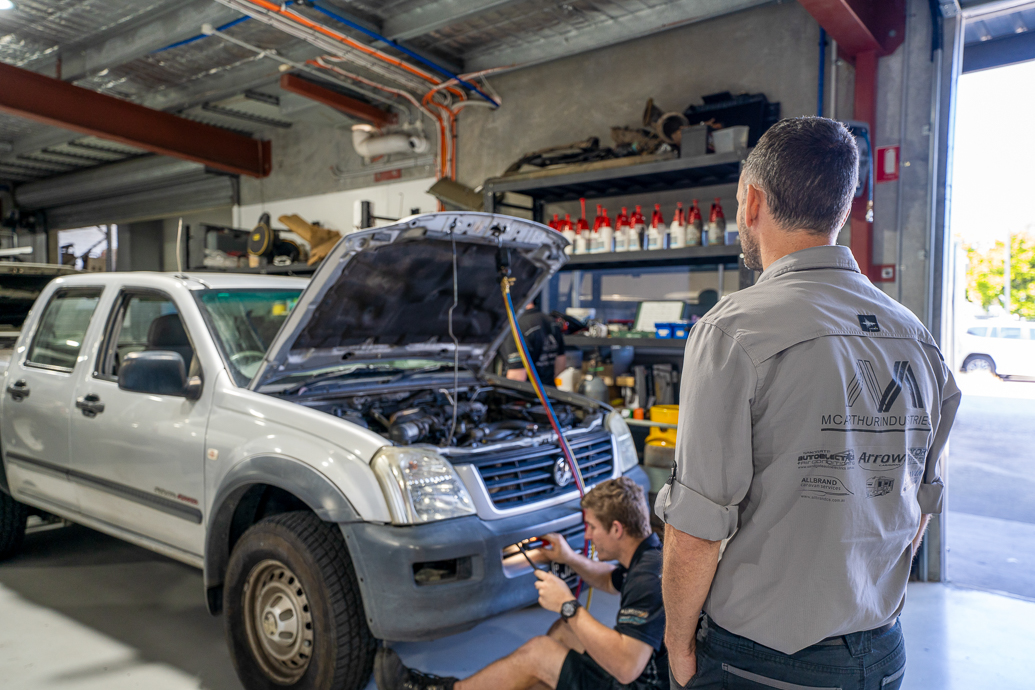
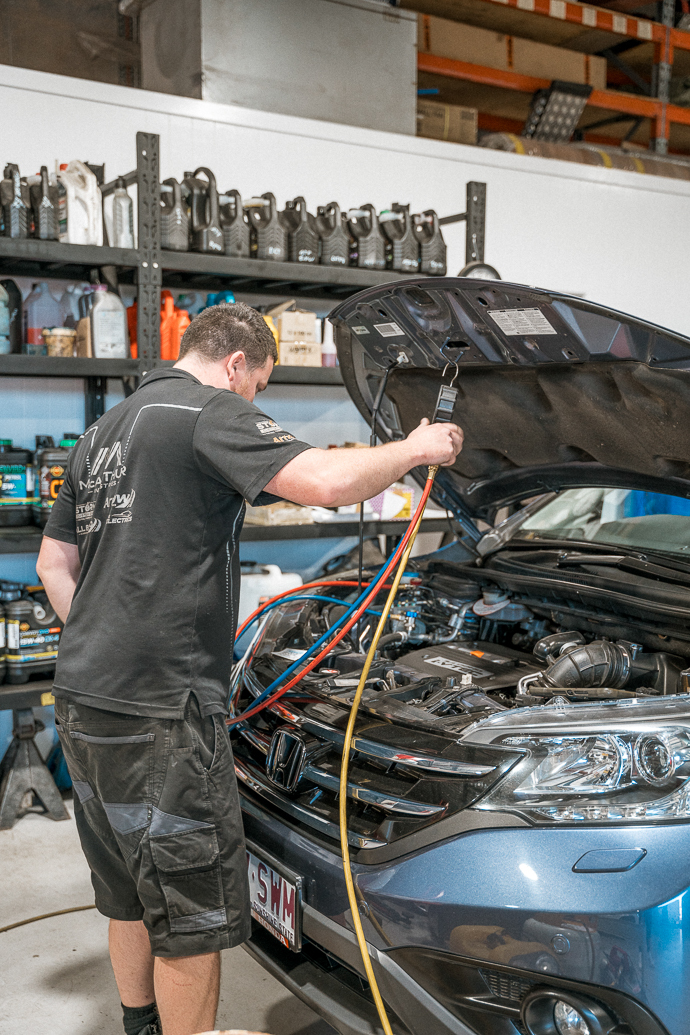
A car air conditioning service involves much more than just a simple recharge or regas. Here’s what our comprehensive service includes:
- System Operation Test: We start by testing the operation of your AC system and report any necessary work.
- Service History Review: We check the last service date and filter replacement status.
- Leak Inspection: The entire system is inspected for leaks, with UV dye used if necessary.
- Belt and Pulley Check: We examine the tension of the drive belt and idler pulleys and listen for any unusual compressor noise.
- Cabin Filter Inspection: The cabin filter is inspected, and its condition is reported.
- Oil Stain Check: We look for any oil stains or leaks if UV dye is present.
In addition to these steps, we also offer replacement cabin filters and anti-bacterial treatments to maintain your vehicle’s air quality.
Identifying and Preventing Leaks
A key aspect of our car air conditioning service is identifying leaks. We introduce UV dye and a gas leak tester to the system. If there’s a leak, the refrigerant evaporates, leaving an oil-dye mixture that presents in the engine bay. Using an ultraviolet light, we can pinpoint the exact location of the leak.
It’s important to note that the refrigerant, R134A, is a synthetic greenhouse gas that can potentially harm the environment if it’s released. This makes it even more critical to ensure your system is leak-free.