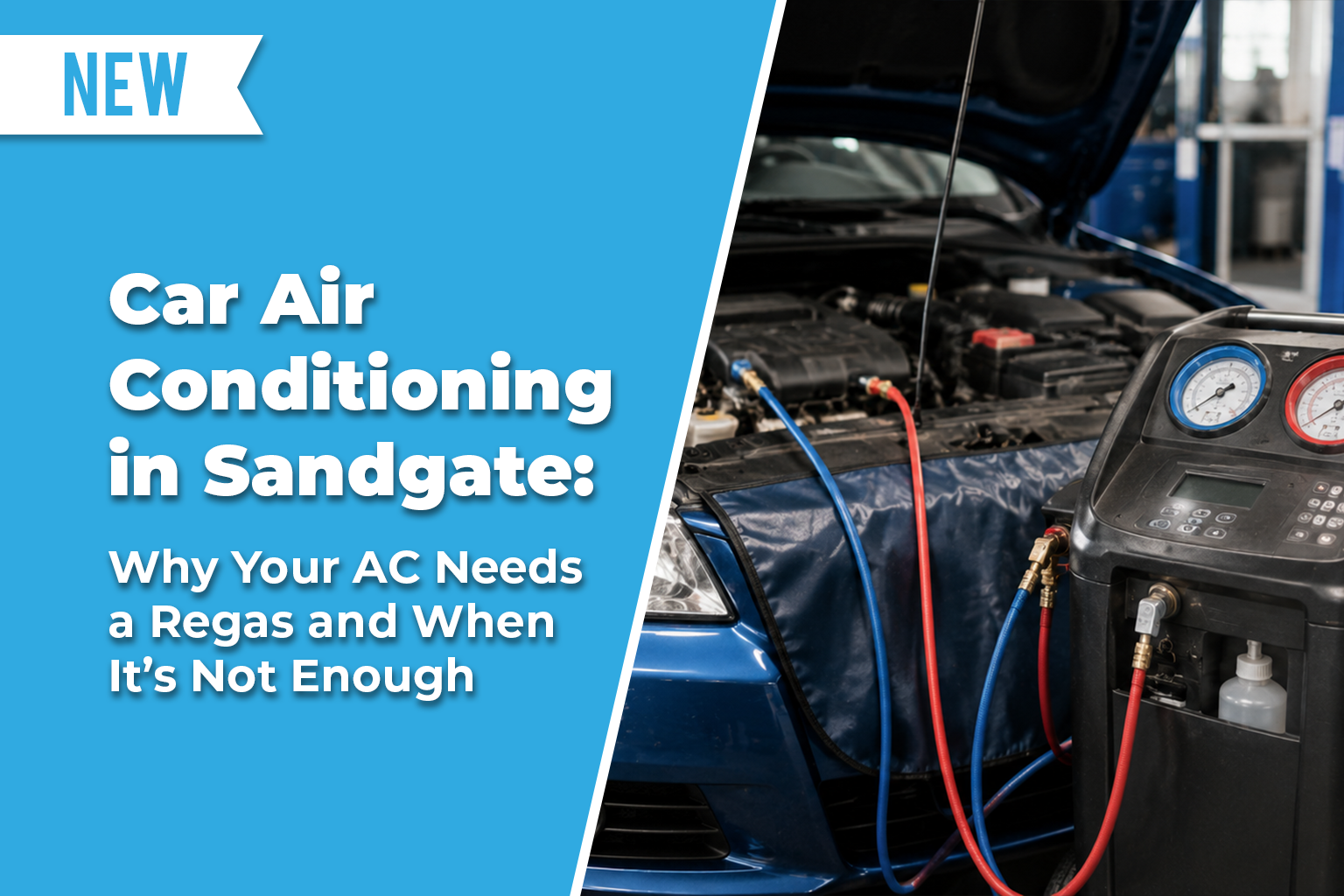
When your car air conditioning stops doing its job in the middle of a Brisbane summer, it’s more than just uncomfortable – it can quickly become unsafe. Around areas like Sandgate, Brighton, Deagon and Shorncliffe, we see it all the time: drivers assume they just need a regas, but the real issue often runs deeper.
The truth is, Queensland’s heat, humidity, and coastal salt exposure put constant pressure on your air conditioning system. Short trips through stop-start traffic around Brisbane Northside only make things harder on compressors and seals. So while a regas can fix weak cooling in some cases, it’s not a cure-all.
Let’s break down what’s really going on when your AC stops cooling properly – and how to avoid wasting money on temporary fixes.
The Main Problem: “It Just Needs a Regas”… Or Does It?
A lot of drivers come in saying the same thing: “My air con’s gone warm, just needs a regas.”
Sometimes that’s true. But often, it’s only treating the symptom.
A regas simply replaces refrigerant gas that has been lost over time. It does not fix why it was lost in the first place. And in most modern vehicles, refrigerant doesn’t just “wear out” – it escapes due to leaks or component failure.
So if your AC is blowing warm air again a few weeks or months after a regas, something else is going on.
Common Causes of Car Air Conditioning Failure
From workshop experience, these are the usual suspects:
1. Small refrigerant leaks
Tiny leaks in hoses, seals, or the condenser are extremely common, especially in coastal conditions around Brisbane Northside. Salt air speeds up corrosion, even if you can’t see it happening.
2. Weak or failing compressor
The compressor is the heart of your AC system. When it starts to wear out, cooling becomes inconsistent or disappears completely.
3. Blocked or inefficient condenser
If airflow through the condenser is restricted (by dirt, debris, or damage), the system can’t release heat properly.
4. Electrical faults
Modern AC systems rely heavily on sensors, relays, and control modules. A simple electrical fault can stop the system from engaging altogether.
5. Cabin filter blockage
You’d be surprised how often a clogged cabin filter is mistaken for a major AC failure. It restricts airflow and makes cooling feel weak even when the system is fine.
Symptoms You Shouldn’t Ignore
Your car usually gives you warning signs before the AC fully fails. Watch out for:
- Air blowing cool but not cold
- Cooling that comes and goes
- Foggy windows that won’t clear properly
- Unusual noises when AC is turned on
- A musty or damp smell from vents
- AC only working while driving, not at idle
In humid areas like Brisbane, these symptoms can become more noticeable quickly due to moisture load on the system.
Why You Shouldn’t Ignore AC Problems
It’s easy to put off AC repairs, especially when the system is “kind of working”. But there are a few issues with that thinking:
- Small leaks become bigger leaks
- Compressors can fail completely if run under low refrigerant
- Electrical strain increases over time
- Repairs become more expensive the longer it’s left
We often see vehicles come in for what could have been a simple fix turn into a full system repair because the early warning signs were ignored.
How It’s Properly Diagnosed (Not Just Guesswork)
A proper air conditioning diagnosis goes well beyond plugging in a regas machine.
At a workshop level, we typically:
- Check system pressures – to see how the refrigerant is behaving
- Inspect for leaks – using UV dye or electronic leak detection
- Test compressor operation – to confirm it’s engaging correctly
- Check condenser airflow – including fans and blockages
- Scan electrical systems – to rule out sensor or relay faults
- Inspect cabin filter and airflow paths – often overlooked but important
This is the difference between a temporary fix and a long-term solution.
Repair Options & What Affects Cost
Car air conditioning repair costs vary depending on what’s actually wrong.
Here’s a simple breakdown:
- Regas only (no leaks found): suitable when refrigerant loss is minimal
- Leak repair + regas: common in older vehicles or coastal-driven cars
- Compressor replacement: higher cost but sometimes necessary if the unit has failed
- Condenser replacement: often needed after corrosion or stone damage
- Electrical repair: varies depending on sensor or wiring faults
Refrigerant type also matters. Newer vehicles using R1234yf are more expensive to service than older R134a systems, which affects overall pricing.
In many cases, the cheapest option upfront isn’t always the cheapest long-term fix – especially if a regas is done without finding the real cause.
Preventative Advice (What Actually Helps)
If you want your AC to last longer in Queensland conditions, a few simple habits help:
- Run your AC regularly, even in winter
- Replace cabin filters on schedule
- Get early symptoms checked (don’t wait for total failure)
- Avoid ignoring weak cooling “because it still works”
- Have periodic system checks before summer hits
Around coastal suburbs like Sandgate and Brighton, salt exposure makes prevention even more important than in inland areas.
FAQs
1. How often should I regas my car air conditioner?
Most systems shouldn’t need regular regassing. If it does, there’s likely a leak.
2. Why is my car AC not cold anymore?
Common causes include low refrigerant, compressor issues, or airflow restrictions.
3. Is a regas a permanent fix?
Only if there are no leaks. Otherwise, it’s temporary.
4. How long does a car AC regas last?
It can last years if the system is sealed and healthy.
5. Can I drive with a faulty AC system?
Yes, but it may lead to further damage if refrigerant is low or compressor is struggling.
6. Why does my AC work while driving but not idle?
Often linked to cooling fan issues or weak condenser airflow.
7. Is car air conditioning repair expensive?
It depends on the fault – regas is cheaper, but component replacement varies widely.
Conclusion
Car air conditioning problems in Brisbane’s climate rarely come down to just “needing a regas”. In most cases, there’s an underlying issue – whether it’s a small leak, a tired compressor, or restricted airflow.
The key is proper diagnosis before parts are replaced. That’s what saves time, money, and frustration down the track.
If your AC isn’t performing like it should, getting it checked early is always the smarter move – especially with how quickly Queensland heat can turn a minor issue into a major one.
📞 Call us: 07 3269 3158
📍 Visit us: 101 Connaught Street, Sandgate QLD 4017
📧 Email: [email protected]