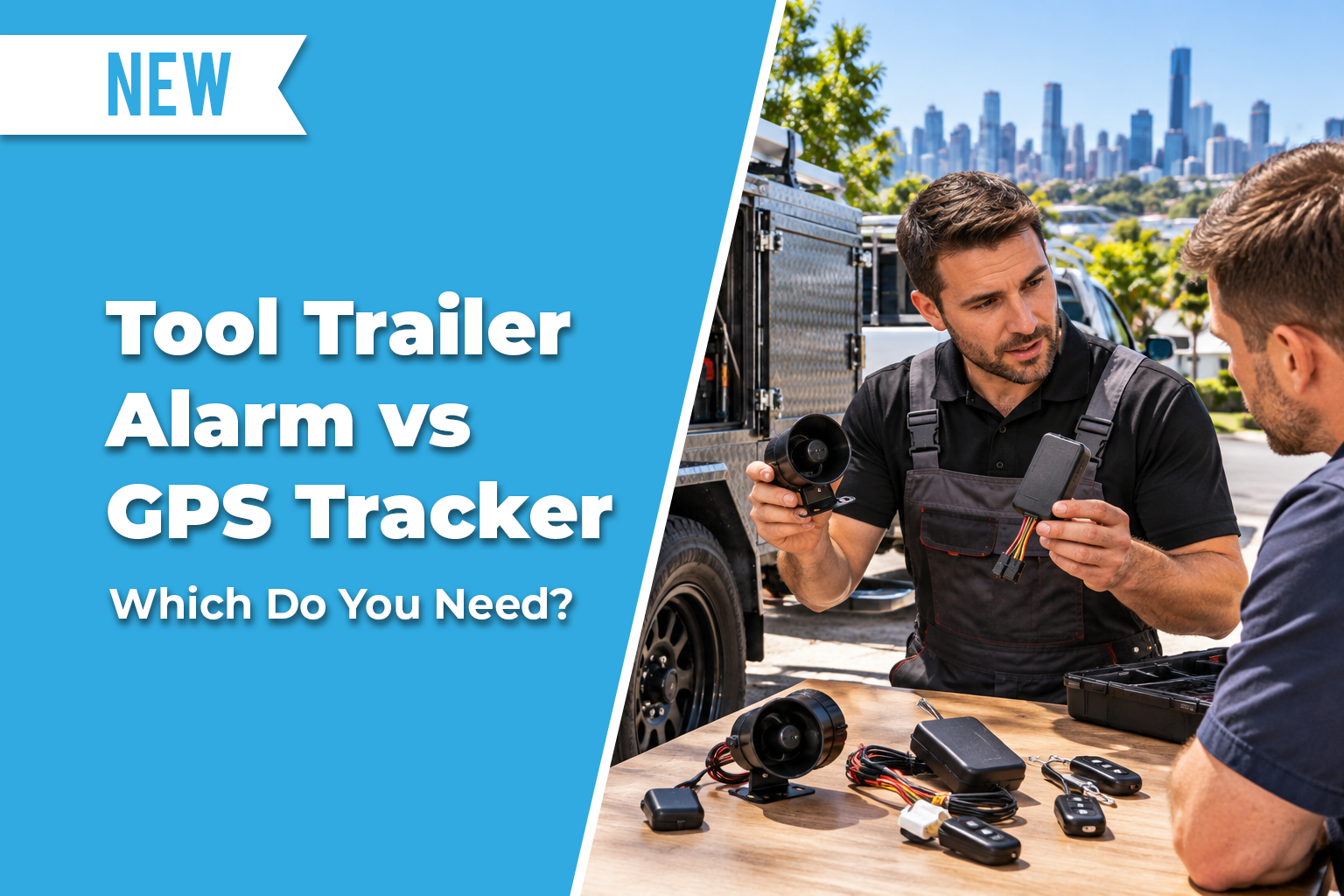
Tool Trailer Alarm vs GPS Tracker: Which Do You Need?
If you’re trying to improve the security of a work trailer, two of the most common electronic options are: a trailer alarm a GPS tracker They sound similar because both…

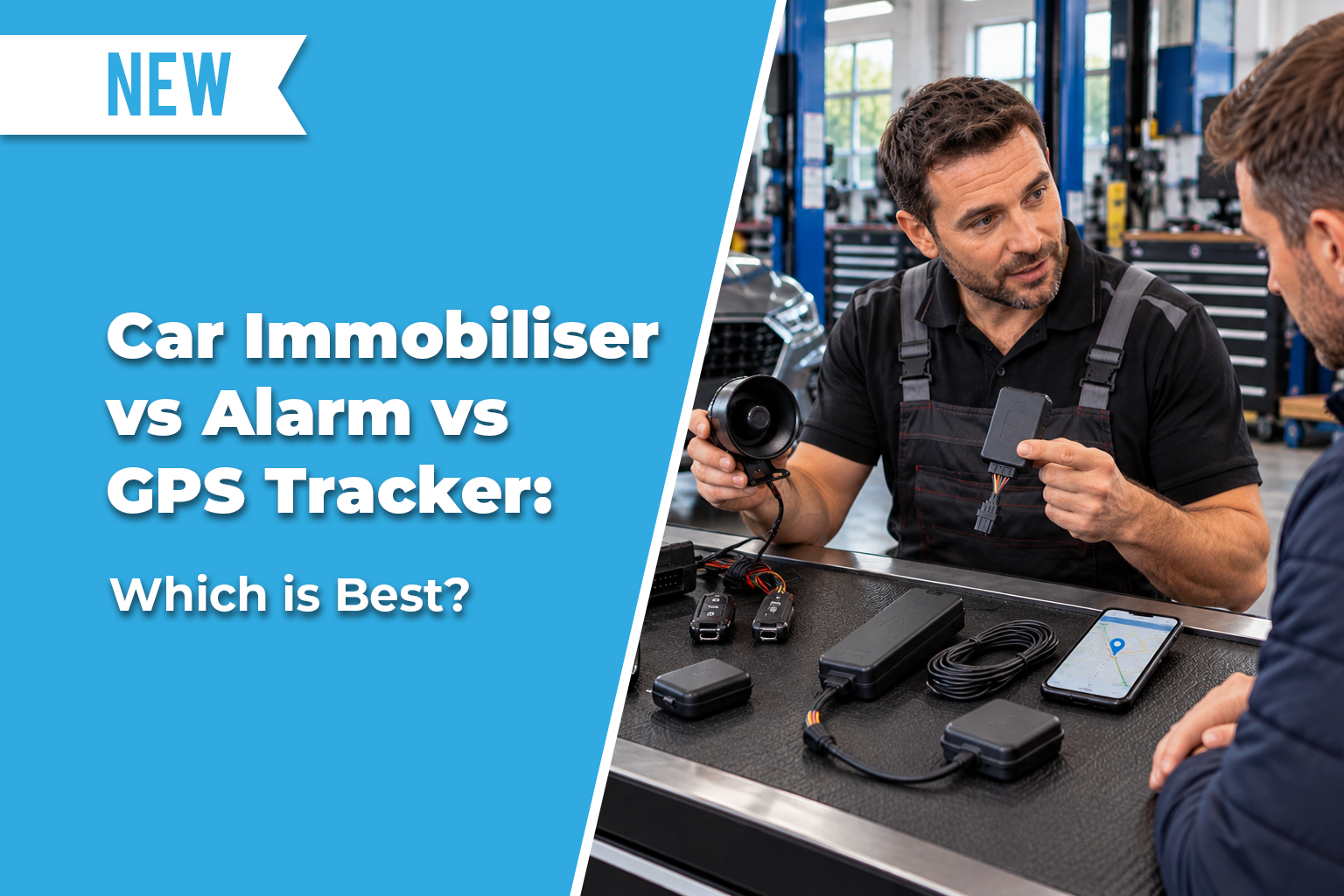
If you’re looking at improving your vehicle security, you’ll probably come across three common options:
The problem is that they’re often compared as though they all do the same thing.
They don’t.
An immobiliser is primarily about authorisation and prevention.
An alarm is mainly about deterrence and alerting.
A GPS tracker is primarily about monitoring and potentially locating the vehicle after it moves.
So the better question isn’t necessarily:
Which one is best?
It’s:
Which security job do you need the system to perform?
For some vehicles, one layer may be enough. For others—particularly work vehicles carrying valuable equipment—a combination of security layers may make more sense.
At Sandgate Auto Electrics & Automotive Services, we recommend looking at the whole vehicle and how it’s used before deciding what security equipment to fit.
Before comparing products, it helps to separate vehicle security into three broad jobs.
The goal is to make unauthorised vehicle operation more difficult.
This is where an immobiliser fits.
The goal is to draw attention to suspicious activity or make the vehicle less attractive to interfere with.
This is where an alarm fits.
The goal is to know where the vehicle is or receive information about its movement, depending on the tracking system.
This is where a GPS tracker fits.
Once you understand those differences, choosing equipment becomes much easier.
A car immobiliser controls whether the vehicle can operate normally without the required authorisation.
Modern cars commonly have some form of factory immobilisation already.
An aftermarket or secondary immobiliser can, where compatible, add another authorisation layer.
Depending on the system, this might involve:
The important point is that an immobiliser isn’t primarily designed to tell you where the car has gone.
Its job is to help prevent unauthorised operation.
An immobiliser may be worth considering when your main concern is:
However, the system needs to be appropriate for the exact vehicle.
A car alarm serves a different purpose.
Rather than controlling vehicle authorisation, an alarm is generally designed to respond when certain conditions are detected.
Depending on the system, this may include events such as:
The alarm may then produce an audible warning or another type of alert, depending on the product.
The advantage is visibility.
An alarm can draw attention to interference with the vehicle and may discourage someone from continuing.
But an alarm and an immobiliser shouldn’t be treated as the same thing.
One alerts.
The other helps control vehicle operation.
A GPS tracker adds another completely different capability.
Its main job is location and monitoring.
Depending on the product and service, a tracker may provide features such as:
Exactly what is available varies significantly between trackers.
A tracker may be especially useful for:
But a GPS tracker should not automatically be considered a replacement for an immobiliser.
A tracker is primarily about knowing where something is or has moved.
An immobiliser is primarily about restricting normal operation.
Those are two different jobs.
| Security system | Main purpose | Can provide an alert? | Helps prevent normal vehicle operation? | Can assist with vehicle location? | Ongoing cost may apply? | Best suited to |
|---|---|---|---|---|---|---|
| Immobiliser | Authorisation / prevention | Usually not its primary purpose | Yes, depending on system | No | Usually product-dependent | Adding another barrier to unauthorised operation |
| Alarm | Deterrence / alert | Yes | Not necessarily | No | Product-dependent | Drawing attention to interference with the vehicle |
| GPS tracker | Monitoring / location | Often, depending on product | Not necessarily | Yes, depending on service | Often possible depending on connectivity/service | Monitoring vehicles, fleets, trailers and mobile assets |
This is why asking which one is “best” isn’t particularly useful.
Each system addresses a different part of vehicle security.
Not really.
They’re designed for different purposes.
An alarm may help draw attention to someone interfering with the vehicle.
An immobiliser may help prevent the vehicle from being operated without the required authorisation.
One doesn’t automatically replace the other.
If your biggest concern is stopping someone from driving the vehicle away, an immobilisation layer may be more relevant.
If your concern is detecting interference with the car while it’s parked, an alarm may play a more useful role.
Some owners may want both.
A standard GPS tracker should not be assumed to prevent theft.
Its main role is tracking or monitoring.
That’s an important distinction.
If your primary goal is preventing unauthorised operation, a tracker and an immobiliser solve different problems.
However, tracking may form part of a broader security strategy.
For example, an owner might use:
Immobilisation → prevention
Alarm → deterrence and alert
GPS tracking → monitoring
That is what layered vehicle security means.
Some modern security or tracking products may include additional features beyond basic location monitoring.
However, feature sets vary widely.
If a system includes remote control or immobilisation functionality, the installation, operation, safety requirements and compatibility need to be understood properly.
Don’t assume that because two products both advertise “tracking” they offer the same functions.
Always check:
Some tracking systems may require an ongoing service or connectivity plan.
Others may operate differently.
This is one of the main differences to consider when comparing a tracker with simpler security devices.
Before buying one, ask:
The purchase price isn’t necessarily the total cost of ownership.
Every security device needs to work reliably.
For vehicle-installed equipment, power management is particularly important.
Depending on the system, an alarm or tracker may remain active while the vehicle is parked.
That means installation needs to consider:
This becomes even more important for trailers or equipment that may spend long periods disconnected from a tow vehicle.
Layered security means not expecting one product to do everything.
Consider a work ute parked overnight on Brisbane’s Northside.
The owner may have expensive equipment in the vehicle and depend on the ute for work the following morning.
Their security setup might address several risks:
Keep genuine vehicle keys secure and out of sight.
Use the vehicle’s existing immobilisation and locking systems.
Where suitable, another authorisation step may add an additional barrier.
Provides another way of detecting or drawing attention to interference.
Adds location or movement monitoring depending on the product.
Each layer solves a different problem.
That is more useful than choosing one device and expecting it to handle prevention, deterrence and recovery on its own.
Tradies should think about more than the replacement cost of the vehicle.
The ute might also contain:
And losing access to the vehicle can disrupt work even if the vehicle is eventually recovered.
Questions worth asking include:
A sole trader with one driver may choose a different setup from a business with several staff using the same vehicle.
The security setup needs to work in the real world.
Potentially, yes.
Because the systems have different functions, they can form separate layers of the same security strategy.
However, that doesn’t mean every vehicle needs all three.
Adding equipment without considering compatibility, installation quality and actual risk can create unnecessary complexity.
The goal should be a sensible combination—not simply the maximum possible number of devices.
What do I already have?
Your vehicle may already include factory immobilisation and an alarm.
What am I worried about?
Unauthorised operation?
Break-in?
Vehicle location?
Tool security?
How is the vehicle used?
Personal vehicle, work ute, fleet vehicle or weekend car?
Who drives it?
One owner or several staff?
What ongoing costs am I comfortable with?
Especially relevant for connected tracking services.
Start with the vehicle rather than the product.
Provide your installer with:
Then decide which security jobs matter most.
Discuss immobilisation.
Discuss alarms.
Discuss tracking.
Discuss a layered setup.
This approach is much more useful than simply asking:
“What’s the best car security system?”
Sandgate Auto Electrics & Automotive Services can assess your vehicle and discuss a practical security setup based on the vehicle and how you use it.
Request a quote: https://quote.sandgateautoelectrics.com.au
Neither is automatically better because they perform different jobs. An immobiliser is primarily intended to control authorised vehicle operation, while an alarm is designed to detect or draw attention to certain forms of interference.
A GPS tracker should not automatically be treated as a theft-prevention device because its core role is location and monitoring. If theft prevention is your priority, discuss immobilisation and other security layers separately rather than relying on tracking alone.
Some GPS tracking systems require ongoing connectivity or service fees, while others may operate differently. Check the full ownership cost, including any SIM, data, app, monitoring or subscription charges, before choosing a system.
Potentially, yes, because immobilisers, alarms and GPS trackers perform different functions. Whether using all three makes sense depends on the vehicle, existing factory equipment, installation requirements and the risks you’re trying to address.
A work ute may benefit from more than one security layer because the vehicle can also carry valuable tools and equipment. Consider where it is parked, how many employees drive it, what is stored inside and whether prevention, alerts, location monitoring—or a combination—would be useful.
An immobiliser, an alarm and a GPS tracker shouldn’t be treated as competing versions of the same product.
They solve different problems.
Immobiliser: helps control vehicle authorisation.
Alarm: helps detect and draw attention to interference.
GPS tracker: helps monitor the vehicle’s location or movement.
For some people, one layer may address the main risk.
For others—particularly work vehicles and vehicles regularly parked outside—a layered setup may make more sense.
If you’re unsure which combination suits your vehicle, Sandgate Auto Electrics & Automotive Services on Brisbane’s Northside can assess your existing setup and discuss practical security options.
Get in touch.
📞 Call us: (07) 3269 3158
📍 Visit us: 101 Connaught Street, Sandgate Qld 4017
📧 Email: [email protected]