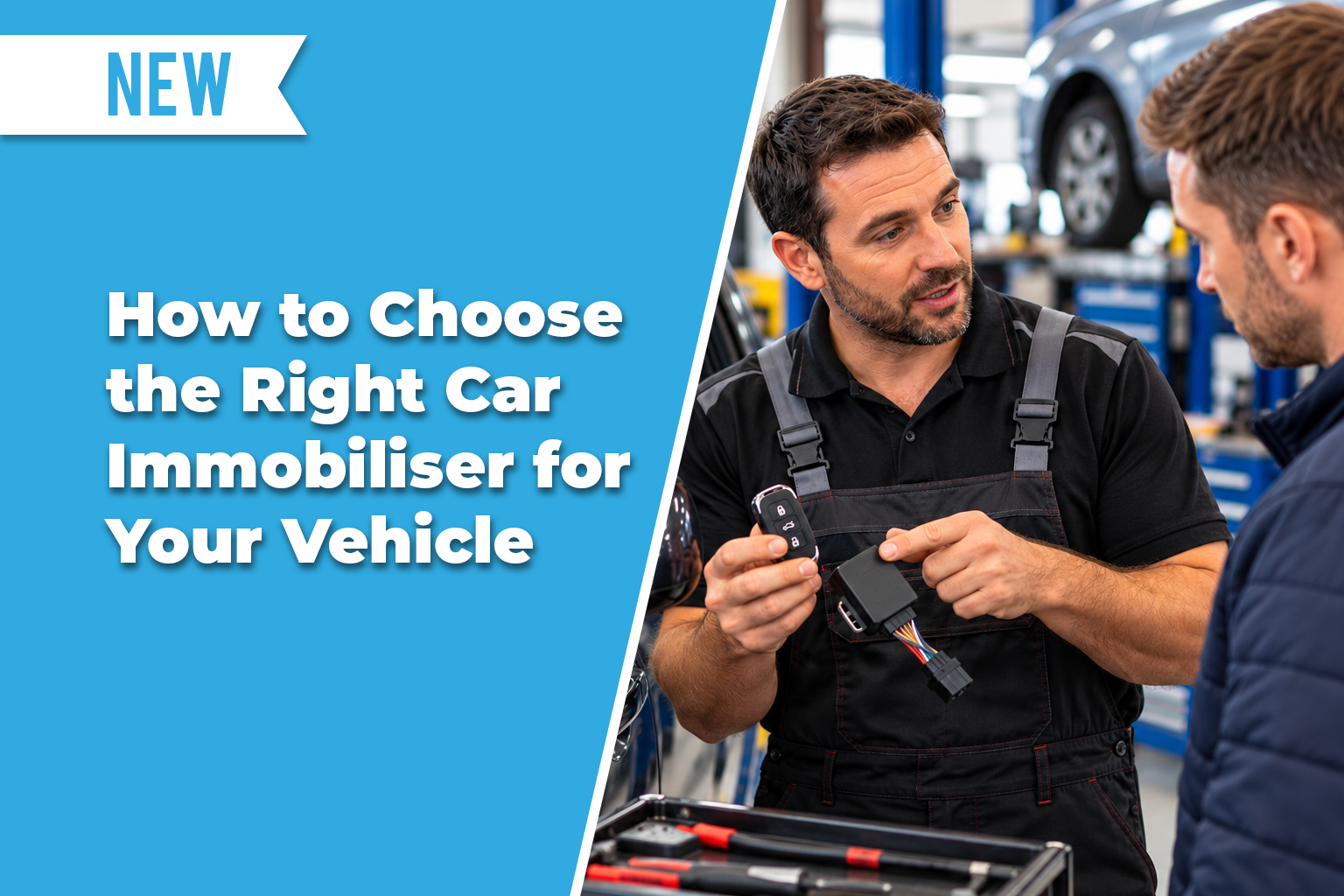
Choosing a car immobiliser can look simple at first.
Find a security system. Check the features. Pick one that fits your budget. Get it installed.
But modern vehicle security is rarely that straightforward.
Different vehicles use different electronic systems. Some already have sophisticated factory immobilisation, while others may benefit from an additional layer of security. The way you use your vehicle matters too.
A work ute carrying thousands of dollars’ worth of tools has different security requirements from a family SUV parked in a locked garage every night.
At Sandgate Auto Electrics & Automotive Services on Brisbane’s Northside, we recommend choosing an immobiliser based on your actual vehicle and risk profile rather than simply buying whichever system has the longest feature list.
Here are the key things to consider.
Start With the Security Your Vehicle Already Has
Before adding another immobiliser, find out what is already fitted.
Many modern vehicles already include factory security such as:
- electronic immobilisation
- coded keys or transponders
- factory alarms
- keyless entry
- push-button starting
- integrated vehicle security systems
This matters because an aftermarket immobiliser should complement the existing security rather than unnecessarily duplicate it.
If you don’t know what your vehicle already has, start there.
Check the owner’s documentation or ask a qualified auto electrician to assess the vehicle.
The goal isn’t simply to install more equipment.
The goal is to identify whether there is a genuine security gap worth addressing.
Think About How Your Vehicle Is Actually Used
Two identical vehicles may need completely different security solutions because their owners use them differently.
Consider where your vehicle spends most of its time.
Is it parked on the street?
A vehicle regularly parked outside overnight may face different risks from one kept inside a secure garage.
Is it used for work?
Tradies and mobile businesses may carry expensive tools, test equipment or other gear.
Losing access to the vehicle can also mean losing a day’s work.
Does it spend time at job sites?
Vehicles left at construction sites, industrial areas, public car parks or remote locations may warrant additional consideration.
Is it a weekend or specialist vehicle?
Performance cars, four-wheel drives, touring vehicles and enthusiast cars can have different security requirements again.
Before choosing an immobiliser, ask:
What am I actually trying to protect, and where is the vehicle most vulnerable?
That question is far more useful than asking which immobiliser is “best.”
Consider Who Drives the Vehicle
A security system also needs to work for the people using it.
A vehicle driven by one person every day gives you more flexibility.
A work vehicle shared between several employees needs a system that authorised drivers can use reliably without creating unnecessary headaches.
Consider:
- how many people drive the vehicle
- whether drivers change regularly
- whether family members need access
- whether the vehicle belongs to a business fleet
- how additional authentication will fit into everyday use
A system can be technically impressive but still be the wrong choice if it becomes frustrating during normal operation.
The ideal setup should balance security and practicality.
Decide Whether You Want a Secondary Immobiliser
Many owners considering an upgrade aren’t replacing their factory immobiliser.
They’re adding a second layer of authorisation.
A secondary immobiliser may require another approved step before the vehicle can operate normally.
Depending on the system, that could involve:
- a PIN
- an authorised button sequence
- a transponder
- another compatible electronic credential
The benefit is that the vehicle’s normal key is no longer necessarily the only form of authorisation.
However, the right solution depends on why you’re adding that second layer.
For example, an owner particularly concerned about key theft may have different priorities from someone driving an older vehicle with relatively basic factory security.
Make Sure the Immobiliser Is Compatible With Your Vehicle
This is one of the most important considerations.
Modern vehicles contain multiple electronic modules that communicate with each other. Ignition, starting, key recognition, engine management, body electronics and security may all be interconnected.
That means an aftermarket security solution should be selected specifically for the vehicle.
Before installation, provide the installer with:
- make
- model
- year
- engine or variant where relevant
- key type
- whether it uses push-button start
- existing aftermarket security equipment
Don’t assume that because an immobiliser works well in one vehicle it will automatically suit another.
Why professional installation matters
The job isn’t simply to make the vehicle difficult to start.
It must continue to start and operate reliably for authorised drivers.
A properly selected and professionally installed system should integrate appropriately with the vehicle and be used according to the security product manufacturer’s requirements.
Compare the Different Authorisation Methods
Different immobilisers ask the authorised driver to prove they’re allowed to use the vehicle in different ways.
Here’s a simple comparison.
| Authorisation method |
Potential benefit |
Consider |
| Factory key or credential |
Very convenient |
May already be the vehicle’s main security layer |
| PIN or keypad |
Adds information the driver must know |
Needs to remain practical for everyday use |
| Button sequence |
May use existing vehicle controls |
Compatibility depends on the vehicle and product |
| Transponder |
Convenient additional credential |
Consider how authorised devices will be managed |
| Integrated electronic system |
May work closely with modern vehicle electronics |
Requires correct product selection and professional installation |
There isn’t a universally superior option.
The best method is the one that provides useful additional security without making normal vehicle use unnecessarily complicated.
Consider What Happens When Someone Else Needs the Vehicle
This is easy to overlook.
What happens when:
- the vehicle goes in for servicing?
- a partner needs to drive it?
- an employee takes the work ute?
- roadside assistance is required?
- the vehicle needs to be moved unexpectedly?
Your security system should have a clear, manufacturer-approved process for authorised access in normal real-world situations.
This is another reason to understand how the immobiliser works from an owner’s perspective before committing to a particular system.
Don’t Choose an Immobiliser on Price Alone
Price matters, but it shouldn’t be the only consideration.
When comparing options, look at:
- vehicle compatibility
- quality of the product
- installation requirements
- usability
- warranty
- technical support
- installer experience
- how the product fits your existing security
A very inexpensive system that isn’t suitable for your vehicle isn’t good value.
Likewise, the most expensive system available may contain features you simply don’t need.
The better question is:
What level and type of additional security makes sense for this vehicle?
Need help narrowing the options down?
Instead of buying an immobiliser first and asking someone to make it work afterwards, have the vehicle assessed before choosing the product.
Sandgate Auto Electrics can help identify security options that are compatible with your vehicle and how you use it.
Request a quote: https://quote.sandgateautoelectrics.com.au
Think Beyond the Immobiliser
Vehicle security doesn’t have to rely on one device.
Depending on your circumstances, a broader strategy might include several layers.
These could include:
- factory immobilisation
- a secondary immobiliser
- an alarm
- vehicle tracking
- secure parking
- physical security measures
- sensible key security
Each serves a different purpose.
For example, an alarm may provide a deterrent or warning, while a tracker may help with vehicle monitoring. An immobiliser focuses on controlling authorised vehicle operation.
The right combination depends on your risk profile.
What About Keyless and Push-Button Start Vehicles?
Vehicles with proximity keys and push-button starting use more integrated electronic systems than older vehicles with a conventional mechanical ignition key.
That doesn’t automatically mean an additional immobiliser can’t be installed.
It does mean compatibility needs to be checked carefully.
If you have a keyless vehicle, tell your installer exactly which make, model and year you own before selecting any aftermarket system.
Avoid assuming that a product advertised for “modern cars” will necessarily be appropriate for yours.
Should Tradies Consider Additional Vehicle Security?
For a tradie, the vehicle is often much more than transportation.
It may carry:
- tools
- equipment
- parts
- diagnostic gear
- business documents
- customer materials
And if the vehicle can’t be used, there may be an immediate impact on work.
That doesn’t mean every work vehicle needs the same security system.
But it does mean business use should be part of the conversation when choosing an immobiliser.
Tell the installer:
- where the vehicle is parked overnight
- whether tools remain inside
- how often it is left at job sites
- how many employees drive it
- whether the vehicle travels frequently
That information can help determine whether additional security is worthwhile.
Questions to Ask Before Choosing an Immobiliser
Before making a decision, ask your installer:
Q. Is this system compatible with my exact vehicle?
Don’t settle for a vague “it should work.”
The product should be appropriate for your vehicle’s year, model and electronic system.
Q. What does the driver need to do every time?
Understand the day-to-day process.
You don’t want to discover after installation that the system doesn’t suit how the vehicle is used.
Q. Can multiple authorised drivers use it?
Important for families and business vehicles.
Q. How does it work with my existing factory security?
The installer should understand what is already fitted rather than treating the vehicle as a blank slate.
Q. What product and installation warranty is provided?
Ask before the work is completed.
Frequently Asked Questions
Q. Do I need an aftermarket immobiliser if my car already has a factory one?
Not necessarily. Many vehicles already have effective factory immobilisation, so the first step should be understanding what your vehicle already has and why you are considering additional security. A secondary immobiliser may be worth discussing if you want another authorisation layer, but the decision should be based on your vehicle and circumstances.
Q. What is the best immobiliser for a work ute?
There isn’t one immobiliser that is automatically best for every work ute. Consider how many people drive the vehicle, where it is parked, what equipment it carries and whether the security system will remain practical during everyday work.
Q. Can I add a second immobiliser to my car?
Additional immobilisation may be possible on many vehicles, but compatibility depends on the vehicle and the proposed security system. Have the vehicle assessed before buying equipment so the installer can recommend an appropriate option.
Q. Are PIN immobilisers better than transponder immobilisers?
They offer different ways of providing additional authorisation rather than one automatically being better. A PIN may suit an owner who wants a code-based security layer, while a transponder may offer greater convenience depending on the vehicle and how it is used.
Q. Can an immobiliser be installed on a push-button start vehicle?
There may be suitable aftermarket security options for some push-button start vehicles. Because these vehicles use integrated electronic starting and security systems, compatibility should be confirmed for the exact make, model and year before installation.
Choosing the Right Immobiliser Comes Down to the Vehicle
There’s no single answer to the question:
“What’s the best car immobiliser?”
The better question is:
“What’s the most appropriate immobiliser for my vehicle, my usage and the security I already have?”
Start by looking at:
- the vehicle’s factory security
- where it is parked
- how it is used
- who drives it
- whether you want another authorisation layer
- compatibility with the vehicle
- everyday convenience
If you’re considering an immobiliser for a car, ute or work vehicle, Sandgate Auto Electrics & Automotive Services on Brisbane’s Northside can help you assess the available options before you commit to a product.
Get in touch.
📞 Call us: (07) 3269 3158
📍 Visit us: 101 Connaught Street, Sandgate Qld 4017
📧 Email: [email protected]